 A field guide to getting there without the gas.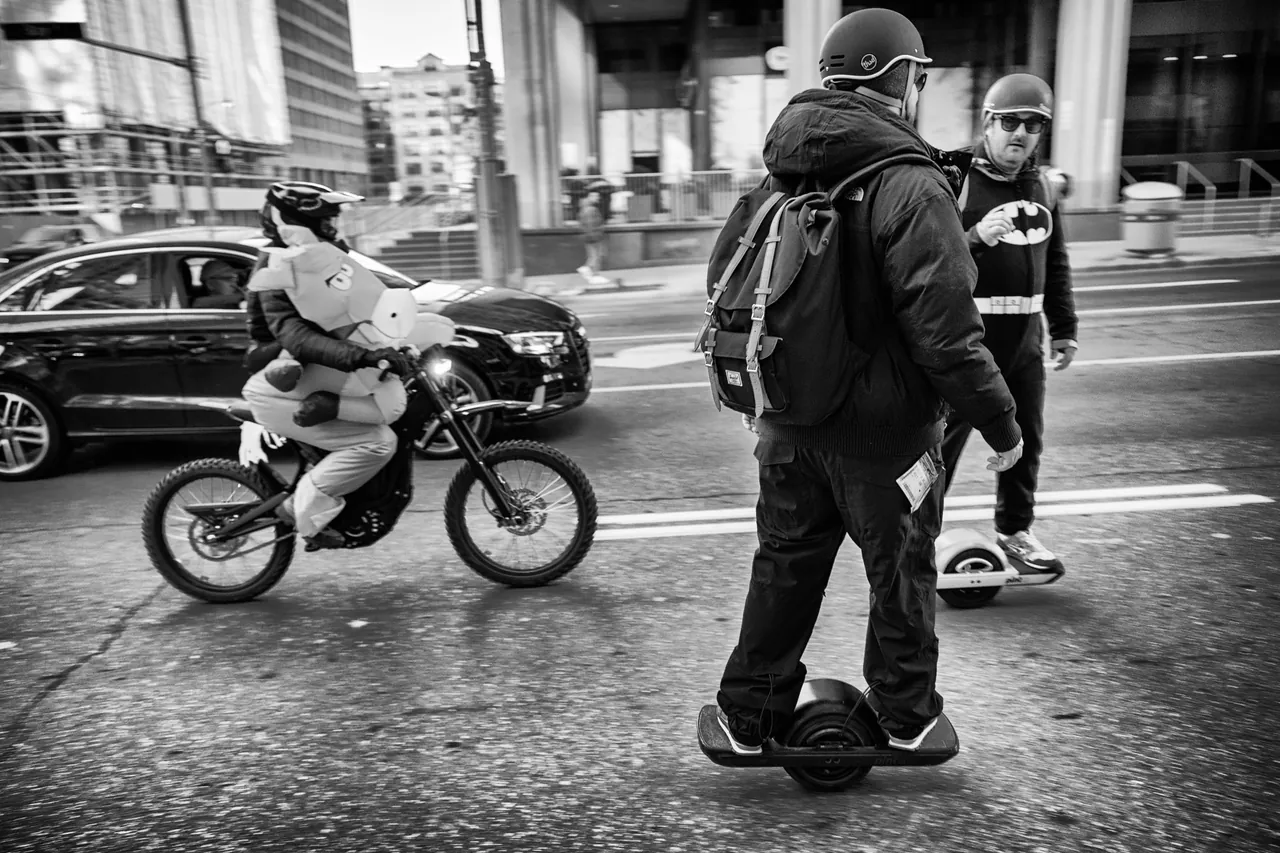
Learn the board before commuting
A Onewheel puts you sideways over a single air-filled tire, with no handlebar and steering controlled by your body position. Small movements change the turn. If you enjoy that kind of riding, six miles to work can be something to look forward to. Try the stance before buying: some people love it immediately, while others would much rather have handlebars or pedals.
Skateboarding, snowboarding or wakeboarding can help with stance and edge awareness. You'll still have to learn how the board responds as it balances you. Practice starts, stops, slow turns, dismounts and slowing down quickly in a quiet place where riding is allowed. Wear suitable protective gear and get consistent on clean, dry pavement before adding traffic. Check the rules for self-balancing boards in the local riding guides, including any transit connection. Permission for bicycles or e-scooters doesn't necessarily cover a Onewheel.
What changes from Pint to GT
The Pint X and Pint S share a listed 27 lb weight and a 12-to-18-mile advertised range. The Pint X uses a stock slick tire, while the Pint S brings a Performance Treaded tire and different contact points. The XR Classic moves to a larger platform, 30 lb and a 17-to-24-mile claim. The GT is 35 lb with a 20-to-32-mile claim. The GT S-Series prioritizes performance, weighs 33 lb and carries a shorter 16-to-25-mile claim.
Future Motion gives those range bands without full rider-weight, speed and temperature details in the comparison we checked. Use them to narrow the choice, then think about carrying. A Pint is easier on daily stairs. A GT asks you to lift five to eight additional pounds in exchange for more claimed range and room for the trip home. The XR Classic sits between them if you want more board underfoot than a Pint without carrying GT weight.
Weight, range and relative cost
Scroll sideways to read all columns.
| Model | Relative price | Advertised range | Listed weight |
|---|---|---|---|
| Pint X | Midrange | 12-18 miles | 27 lb |
| XR Classic | Premium | 17-24 miles | 30 lb |
| GT | Premium | 20-32 miles | 35 lb |
| GT S-Series | High-end | 16-25 miles | 33 lb |
Speed, hills, headwinds, cold, tire pressure and your weight all affect how much of that range you'll get. The motor also needs power left to keep you balanced. Plan for the whole trip home and ease off as the battery gets low; hard acceleration and climbing ask more of the board. At the other end of the charge, read the model's overcharge guidance before starting a long descent with a full battery. Regenerative braking needs somewhere to send the energy. Work out an alternate route or pickup before trying to stretch the last of a charge.
The recall and the board’s warnings
Future Motion's 2023 recall page covers the models sold at the time: original Onewheel, Onewheel+, Onewheel+ XR, Pint, Pint X and GT. It says affected boards can stop balancing when their limits are exceeded. For GT, Pint X, Pint and XR, the prescribed action is to install the current app and firmware that adds haptic buzz, then follow the eligibility instructions for the serial number. Original Onewheel and Onewheel+ models are ineligible for that update and should not be used. A used-board purchase should begin with model identification, serial-number eligibility and firmware status.
Haptic buzz and pushback mean it's time to ease off. They tell you the board may be approaching the limit of its balancing ability. A hill, low battery, heavier load or sudden acceleration can bring that point closer. Learn the signals at a controlled speed and keep your ears available to hear both the board and what's around you. If it starts behaving differently, shows an error or has taken an impact, stop and find out why. Traffic is a bad place to experiment with a fault.
Tires and repairs
Pressure makes a noticeable difference to a Onewheel's feel, range and rim protection. The Pint X has a slick tire; the Pint S, XR Classic, GT and base S-Series versions in this catalog have Performance Treaded tires. Our sealant choice is Armor-Dilloz Red for rides at 30 mph or less. Stock boards already contain sealant, according to Future Motion. Find out what's inside before adding more, and follow Armor-Dilloz's current installation guide. Use Future Motion's service instructions for work on the tire itself. Sealant helps with tread punctures, while structural tire damage needs repair or replacement. Keep checking pressure after installation.
Read Future Motion's limited warranty before buying, especially used. The board, battery and wear parts have different time and mileage limits, and the exact model may have its own coverage. Water intrusion and damage from unauthorized changes are excluded. The policy names the San Jose facility as the authorized repair location, which can mean packing the board for shipping. Keep the original box if you have room. Find out who will change your tire, what work affects the warranty and how you'll get to work while the board is away.
When another ride makes more sense
Give yourself another way to work while you're learning. A Onewheel won't suit you if you need transport immediately, have nowhere calm to practice or aren't willing to risk a fall. Check the office storage rules and settle any uncertainty about local access before buying. Try carrying 27 to 35 lb in one hand as well. Wet leaves, ice, deep standing water, rail crossings and damaged pavement can also rule out an otherwise convenient route.
Once the route and board feel familiar, a quick check before leaving should cover the tire, footpads, rails, charge and firmware. Keep a pickup contact handy. Carrying a board across a lobby is one thing; carrying it home for the rest of the commute is quite another.