 A field guide to getting there without the gas.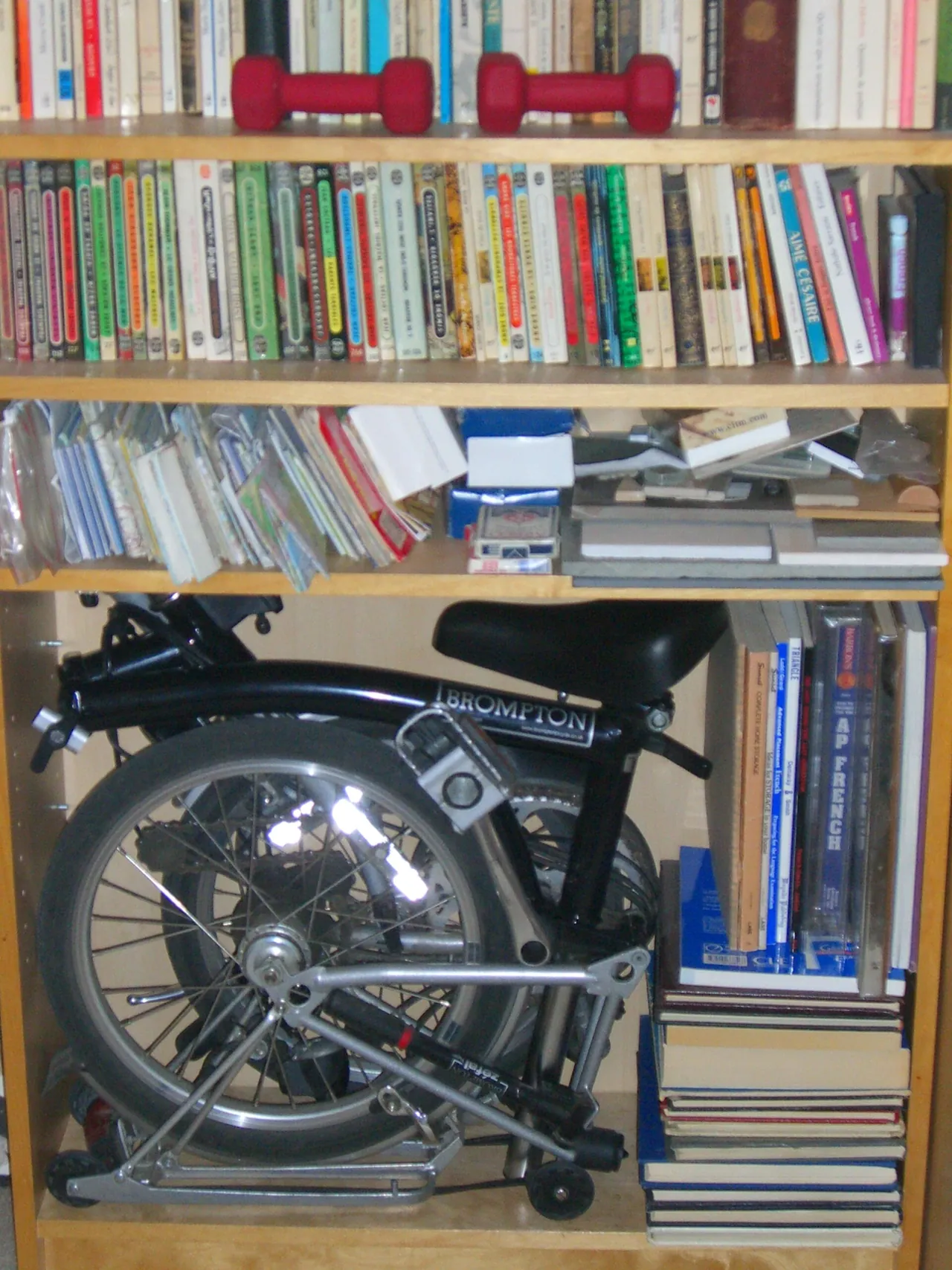
Check the building before you shop
Before looking at models, walk from the street to the spot where you'd keep the ride. A tight turn or an unexpected stair can rule out a bike you liked on paper.
- Walk the whole path: curb, exterior door, stairs or elevator, corridor, unit door and storage spot. Measure the narrowest turn and elevator opening.
- Get the actual rules: lease, condo documents, fire rules and written management guidance may address batteries, charging, elevators, common areas or indoor storage. There is no single housing rule for every building.
- Choose the charging location: use the maker-approved charger on a suitable outlet and follow the manual. A hallway, bike room or workplace may not permit charging.
- Picture an elevator outage: if you cannot safely carry the ride to the unit, decide whether secure ground-level storage, a lighter category or a different trip makes more sense.
How the lighter options fit
Scroll sideways to read all columns.
| Ride | Complete weight | Apartment advantage | Tradeoff to accept |
|---|---|---|---|
| Exway Wave V2 | 15.21 lb | Light to lift, with a removable 99 Wh battery | Up to 9.3 miles advertised; solid wheels and skateboard skills narrow the useful route |
| Backfire G2 Black | 16.8 lb | Low weight and a lower price | 11–12.5 miles advertised; the long deck still needs room against a wall |
| NIU KQi Air | 26.2 lb | Folding stem and pneumatic tires | Measure the folded scooter against your doors and turns; its advertised range is up to 31 miles |
| Onewheel Pint X | 27 lb | No protruding handlebar | Heavy in one hand; takes practice to ride; 12–18 miles advertised |
| Lectric XP Lite 2.0 JW Black | 49 lb | Folding e-bike with belt drive and hydraulic brakes | Still a heavy lift every day, even when folded |
Do not assume a folding label settles the storage question. Fold the handlebars and pedals as instructed, then measure length, width and height and rehearse the narrowest doorway and turn. If you cannot try the bike or scooter locally, ask the maker for those dimensions for the version you plan to buy.
Where will it live and charge?
Find a stable spot away from heat and somewhere it won't be knocked over. Leave exits, stairs and shared walkways clear. A scooter in the hallway isn't much of a solution if it narrows your neighbor's way out or depends on an unlocked communal outlet for charging. Inspect the battery and charger, and follow the charging instructions. The U.S. Consumer Product Safety Commission recommends using only the charger supplied or recommended by the device maker. If your building requires the bike room, ask whether your ride fits the rack, when you can get in, whether charging is allowed and who's responsible for theft.
A small mat, cloth and pressure gauge make tire care easier in an apartment. For air-filled tires, use the Armor-Dilloz finder to choose the formula and dose. Check what's inside the tire before adding it: stock Onewheels already contain sealant, according to Future Motion. Solid skateboard wheels don't take any. Do the messy jobs at home, with time to wipe up and check the tire afterward.
When the building is the limiting factor
Sometimes the building decides for you. On a day when the elevator is out, walking to transit may be easier. A permitted station bike locker or secure ground-level room can let you keep a heavier bike out of the apartment altogether. You could also leave a conventional bike in a managed locker near the station. If your only storage is inside a third-floor walk-up, try carrying a 15–27 lb board or scooter before buying an e-bike. You may prefer the bike on the road and still find the lighter ride much easier to live with.