 A field guide to getting there without the gas.
Find the tire type first
Scroll sideways to read all columns.
| Type | What holds the air | What to inspect | Liquid sealant? |
|---|---|---|---|
| Tube-type pneumatic | A separate inner tube | Tube size and material, valve, pressure, tire and rim | Check the tube material and valve against the sealant instructions. |
| Tubeless pneumatic | Tire-to-rim seal | Bead, rim, valve, pressure and maker-approved repair | Check the tire instructions and what is already inside. |
| Factory-filled or self-sealing | Usually a pneumatic system with liquid or a built-in sealing layer | The maker's description and what is already inside | Do not add or mix blindly. |
| Solid or foam-filled | No serviceable air chamber | Cuts, chunking, tread, bonding and replacement limit | No. |
| Airless or honeycomb | Flexible structure instead of pressurized air | Tears, deformation, hub or sleeve wear | No. |
Tube and tubeless both need air
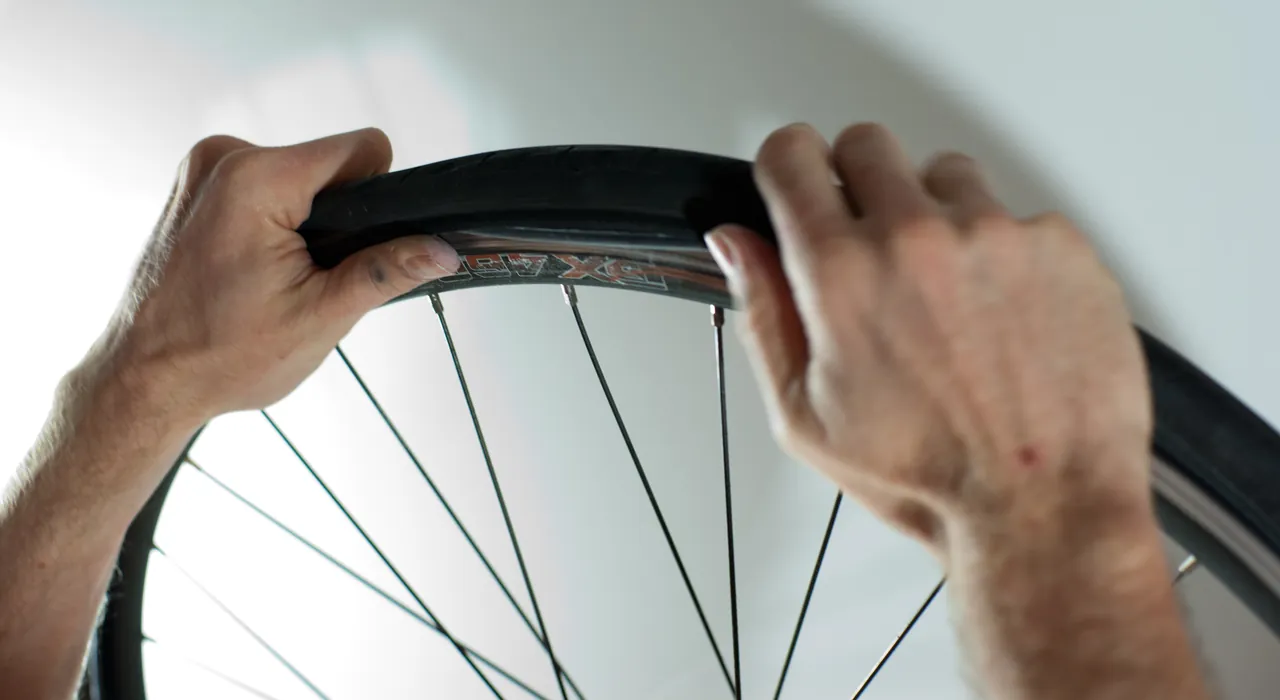
Both tube and tubeless tires need the right pressure. Running low can damage the tire, tube, bead or rim and change the handling and range. If you have a tube, find out its size and valve type before you need a replacement. With a hub motor, taking the wheel out can mean dealing with a cable and fasteners you'd rather work on at home. A tubeless repair depends on the tire, bead and rim. Check the allowed repair method before assuming a bicycle plug or patch will do the job.
The NIU KQi Air has 9.5-inch tubeless pneumatic tires. The Brompton Electric P Line shown in our catalog has Continental pneumatic tires with Tubolito Schrader tubes inside. Both need air. The Brompton also needs you to check which products work with that particular tube material.
See what is already in the tire
The Segway MAX G3 has a factory self-sealing layer. Lectric's XP Lite 2.0 JW Black comes with Slime, and Future Motion says stock Onewheels contain sealant. Find out which material you're dealing with and read the instructions for adding another product. A built-in layer, Slime and ordinary liquid sealant aren't interchangeable. Ask the maker if you can't identify the fill. None of these treatments repairs a cut sidewall, damaged bead or other structural failure, and some punctures will still need a repair.
Which Armor-Dilloz formula should you use?
We recommend Armor-Dilloz Red for tube and tubeless bikes, e-bikes, scooters and other air-filled rides with a top speed of 30 mph or less. Blue is the higher-speed formula, while Green is a lower-cost option when it suits the tire. Check the tube material and what's already inside, make sure you can reach the valve, and measure the dose. Solid, foam-filled and airless wheels don't use liquid sealant. If you don't know what's already in an air-filled tire, find out before adding more.
Keep a simple tire note
Keep the tire details on your phone: size, whether it uses a tube, pressure, valve, what's inside and when you added it. Include the repair method, the tools it needs and who could collect the ride. Update the note when you change a tire. It makes buying a replacement or packing for a longer trip much easier than trying to remember what's fitted.